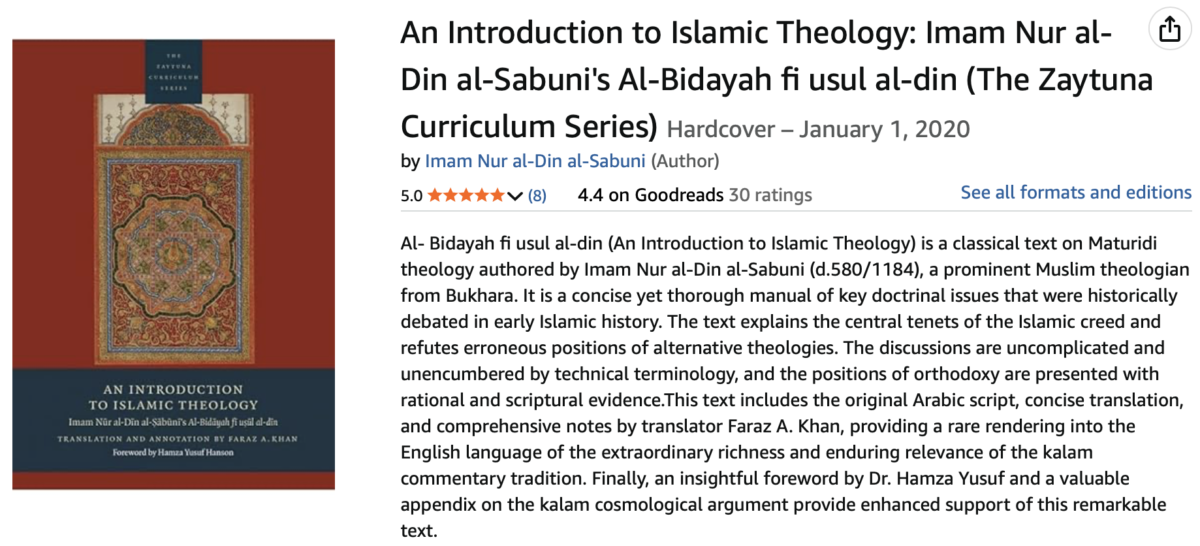
Book Review: An Introduction to Islamic Theology by Imam Niẓām al-Dīn al-Ṣābūnī (Al-Bidāyah fī Uṣūl al-Dīn)
An Introduction to Islamic Theology is a translation and commentary on Imam Niẓām al-Dīn al-Ṣābūnī’s Al-Bidāyah fī Uṣūl al-Dīn, a foundational text in Islamic theology. This work, rendered into English by Shaykh Paraz Khan, is a significant contribution to the study of Islamic creed (‘aqīdah) and theology (kalām), particularly within the Māturīdī tradition. The book offers readers a clear and accessible entry point into the complex world of Islamic theological thought, while maintaining the depth and rigor of its classical sources.
Strengths of the Book
Authoritative Source Text:
Al-Bidāyah fī Uṣūl al-Dīn is a renowned intermediate text in the Māturīdī school, one of the two dominant theological traditions in Sunni Islam (the other being the Ash‘arī school). Imam al-Ṣābūnī’s work is celebrated for its clarity, conciseness, and systematic presentation of core theological principles. By translating this text, the book provides English-speaking readers with access to a pivotal work that has shaped Islamic theology for centuries.
Focus on the Māturīdī Tradition
The Māturīdī school, founded by Imam Abū Manṣūr al-Māturīdī (d. 333/944), is often underrepresented in English-language literature on Islamic theology. This book addresses that gap by presenting the Māturīdī approach to key theological issues, such as the nature of God’s attributes, free will, and the relationship between faith and reason. The Māturīdī tradition’s emphasis on a balanced synthesis of reason (‘aql) and revelation (naql) is particularly relevant in contemporary discussions about the role of rationality in religion.
Clear and Accessible Translation
Shaykh Paraz Khan’s translation is both faithful to the original Arabic text and accessible to modern readers. The language is clear and straightforward, making complex theological concepts understandable without oversimplifying them. This makes the book suitable for both students of Islamic theology and general readers interested in learning about Islamic creed.
Insightful Commentary
In addition to the translation, Shaykh Paraz Khan provides commentary that elucidates the text’s arguments and places them in their historical and intellectual context. This commentary is particularly helpful for readers unfamiliar with the Māturīdī tradition or classical Islamic theology. It also highlights the enduring relevance of the text’s teachings in addressing contemporary theological and philosophical questions.
Comprehensive Coverage of Core Topics
The book covers a wide range of theological topics, including the nature of God, prophethood, the afterlife, and the principles of faith. Each topic is treated with precision and depth, reflecting the systematic approach of the Māturīdī school. The text’s organization makes it an excellent reference for studying specific theological issues or for gaining a broad understanding of Islamic creed.
Historical and Intellectual Context
The foreword and commentary provide valuable insights into the historical development of Islamic theology, particularly the emergence of the Māturīdī and Ash‘arī schools as responses to the challenges posed by the Mu‘tazilī rationalists and other intellectual traditions. This context helps readers appreciate the significance of Al-Bidāyah fī Uṣūl al-Dīn within the broader history of Islamic thought.
Areas for Improvement
While the book is a valuable resource, there are a few areas where it could be enhanced:
Comparative Analysis with Other Schools
While the focus on the Māturīdī tradition is a strength, the book could benefit from a more extensive comparative analysis with other theological schools, such as the Ash‘arī and Mu‘tazilī traditions. This would provide readers with a more comprehensive understanding of the diversity within Islamic theology.
Engagement with Modern Theological Debates
While the book excellently presents classical theological concepts, it could further explore how these concepts can be applied to modern theological and philosophical debates. For example, discussions on free will, divine determinism, and the nature of God’s attributes could be extended to address contemporary issues in science, ethics, and metaphysics.
Supplementary Materials
The inclusion of supplementary materials, such as a glossary of key terms, a timeline of Islamic theological history, or a bibliography for further reading, would enhance the book’s utility as a teaching and learning resource.
Conclusion
An Introduction to Islamic Theology is an essential work for anyone seeking to understand the Māturīdī tradition and the broader field of Islamic theology. Imam Niẓām al-Dīn al-Ṣābūnī’s Al-Bidāyah fī Uṣūl al-Dīn is a masterful text that combines clarity, depth, and systematic rigor, and Shaykh Paraz Khan’s translation and commentary make it accessible to a modern audience.
The book’s focus on the Māturīdī school, balanced approach to reason and revelation, and comprehensive coverage of core theological topics make it a valuable resource for students, scholars, and general readers alike. While there is room for further engagement with other traditions and contemporary issues, the book’s strengths far outweigh its limitations. It is a timely and significant contribution to the study of Islamic theology, offering readers a profound understanding of Islam’s rich intellectual heritage.
an The book is available in Amazon
Written by

Ustadha Fahmina holds a Sanad in Alimiyyah (6-year Dars-e-Nizami) from two recognized Islamic institutes and a Master's degree in Arabic from Indira Gandhi National University. She teaches Qur'an, Tafsir, Hadith, and Fiqh following the Hanafi school within Ahl al-Sunnah wal Jama'ah. She founded Islam Hashtag in 2015 to bring authentic Islamic learning to Muslim families online. She also holds a degree in Optometry and is the founder of Optometryskills.com.
Discover more from Islam Hashtag
Subscribe to get the latest posts sent to your email.