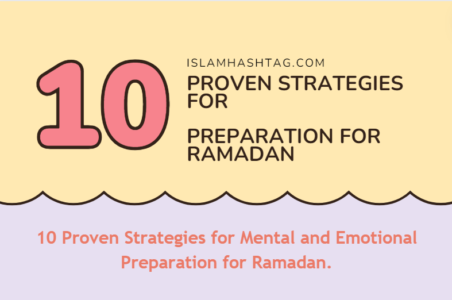
10 Proven Strategies for Mental and Emotional Preparation for Ramadan.
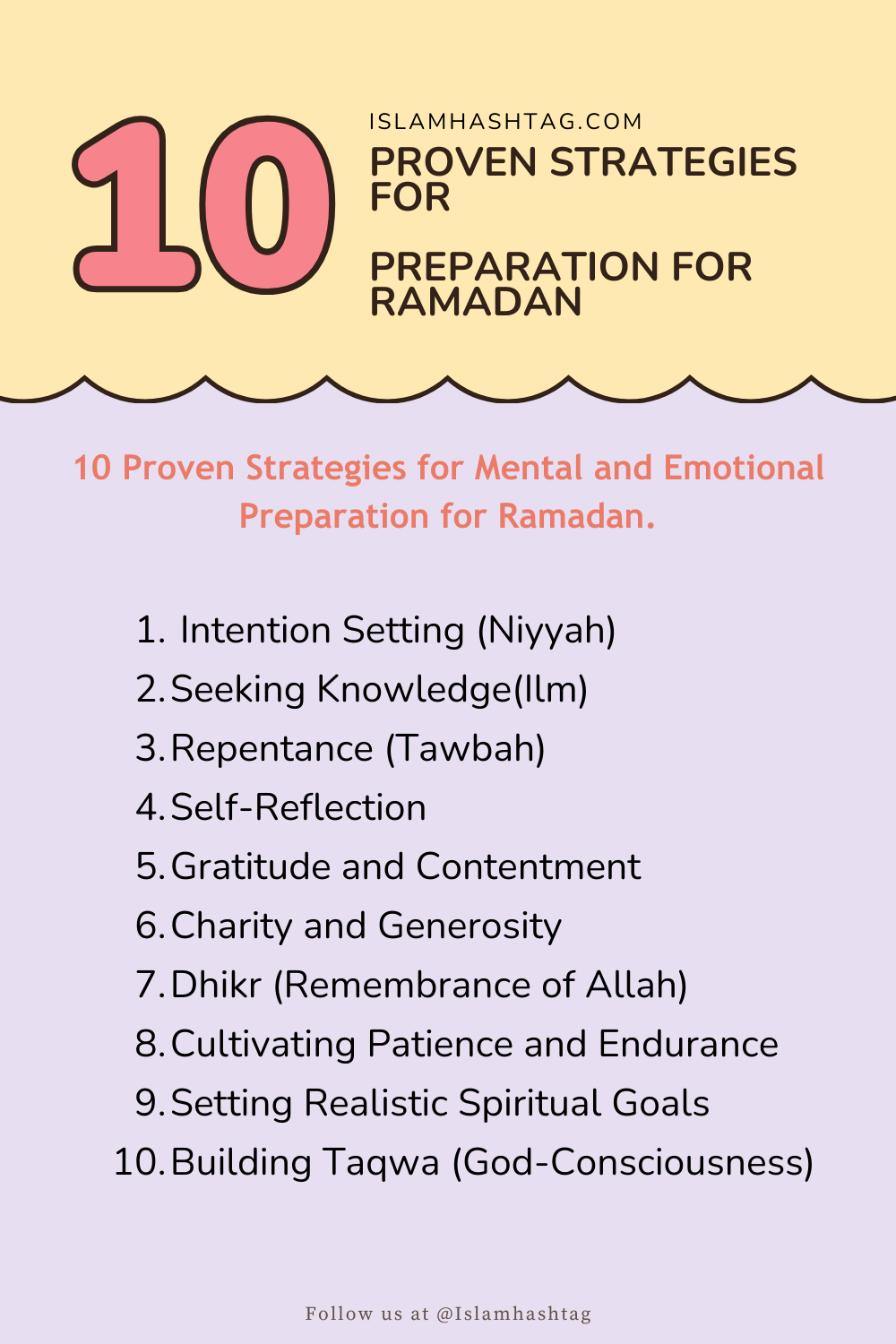
Mental and Emotional Preparation for Ramadan.
Ramadan is the most waited time of the year. Let us Plan ahead for Ramadan so that In sha Allah when it comes, we are fully Prepared to utilize the blessed days.
Here are few tips that can help in Pre-Planning our Ramadan.
- Intention Setting (Niyyah)
The intention to fast and make the most of Ramadan is essential. The prophet Muhammad (peace be upon him) said, “Actions are but by intentions, and every person shall have only that which he intended.” Setting a sincere intention to fast and to engage in increased worship during Ramadan lays the foundation for a spiritually rewarding experience. ( Read Practical steps on Intention setting) - Seeking Knowledge (ilm)
Acquiring knowledge about the virtues and significance of Ramadan is key to preparing mentally and emotionally for this blessed month. The Quran and Hadith contain numerous teachings about the importance of Ramadan, fasting, and the increased rewards for acts of worship during this time. Understanding these teachings can inspire and motivate individuals to approach Ramadan with a focused and enlightened mindset. (Virtue of seeking Ilm) - Repentance (Tawbah)
Repentance is an integral part of preparing for Ramadan. Reflecting on one’s shortcomings and seeking forgiveness from Allah allows individuals to enter Ramadan with a clean heart and a renewed sense of purpose. The Quran reminds believers of the importance of seeking repentance, stating, “And turn to Allah in repentance, all of you, O believers, that you might succeed.” - Self-Reflection
Engaging in self-reflection and self-evaluation helps individuals identify areas for personal growth and improvement. The Prophet Muhammad (peace be upon him) encouraged introspection, stating, “A moment of reflection is worth more than a year of worship.” Taking stock of one’s actions, behaviors, and spiritual state can lead to a deeper awareness of one’s strengths and weaknesses, paving the way for positive change during Ramadan.( Get a Ramadan Journal) - Building taqwa (God-Consciousness)
Taqwa, or God-consciousness, is a central theme in Islam. The Quran emphasizes the importance of developing taqwa, stating, “O you who have believed, fasting has been decreed upon you as it was decreed upon those before you, that you may become righteous (muttaqeen).” Cultivating taqwa through increased mindfulness of Allah’s presence and adherence to His commandments is essential for a spiritually enriching Ramadan experience. - gratitude and Contentment
Expressing gratitude and cultivating contentment are essential for emotional preparation for Ramadan. Gratitude for the blessings of health, sustenance, and faith can elevate one’s spiritual state and enhance the experience of fasting and worship. The Prophet Muhammad (peace be upon him) said, “Wondrous is the affair of the believer, for there is good for him in every matter; this is not the case with anyone except the believer. If he is happy, then he thanks Allah, and thus there is good for him.” (See Gratitude Journal) - Charity and Generosity
Engaging in acts of charity and generosity is a fundamental aspect of emotional preparation for Ramadan. The Quran and Hadith emphasize the virtues of giving to those in need and supporting charitable causes. - Engaging in frequent remembrance of Allah through dhikr (the repetition of the names of Allah and phrases of praise) is a powerful means of mental and emotional preparation for Ramadan. The Quran states, “Verily, in the remembrance of Allah do hearts find rest.” Establishing a routine of dhikr helps center the mind, cultivate inner peace, and strengthen one’s connection to the divine, all of which are essential for a spiritually fulfilling Ramadan.
- Cultivating Patience and Endurance
Ramadan requires physical, mental, and emotional endurance. Cultivating patience and perseverance is crucial for navigating the challenges and temptations that may arise during fasting. The Prophet Muhammad (peace be upon him) said, “Fasting is a shield; so when one of you is fasting, he should neither indulge in obscene language nor should he raise his voice in anger. If someone attacks him or insults him, let him say: ‘I am fasting!'” - Setting Realistic Spiritual Goals
Setting realistic spiritual goals for Ramadan is an effective way to prepare mentally and emotionally for the month ahead. Whether it’s increasing the recitation of the Quran, performing additional prayers, or seeking forgiveness for past mistakes, establishing achievable objectives helps individuals focus their efforts and intentions. The Prophet Muhammad (peace be upon him) emphasized the significance of setting goals, stating, “Take up good deeds only as much as you are able, for the best deeds are those done regularly even if they are few.”
Get a Book on Biography of Prophet Muhammad (Sallalahu alaihe wa sallam)
Written by

Ustadha Fahmina holds a Sanad in Alimiyyah (6-year Dars-e-Nizami) from two recognized Islamic institutes and a Master's degree in Arabic . She teaches Qur'an, Tafsir, Hadith, and Fiqh following the Hanafi school within Ahl al-Sunnah wal Jama'ah. She founded Islam Hashtag in 2015 to bring authentic Islamic learning to Muslim families online. She also holds a degree in Optometry and is the founder of Optometryskills.com.
Discover more from Islam Hashtag
Subscribe to get the latest posts sent to your email.