The Horses of the Prophet Muhammad ﷺ and Their Names
Throughout Islamic history, horses have symbolized strength, nobility, and divine favor. In the life of Prophet Muhammad ﷺ, they were more than mere animals — they were companions in the path of Allah, partners in defense of the faith, and reflections of beauty, patience, and power. The Prophet ﷺ not only rode horses but also spoke of their virtues, reminding the believers that “goodness is tied to the forelocks of horses till the Day of Resurrection.”
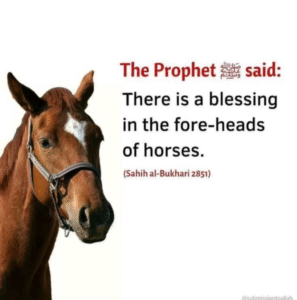
The Horses of the Prophet ﷺ and Their Names
Scholars differ on the exact number of horses owned by the Prophet ﷺ. Some say he had seven horses, while others mention more than twenty. Each horse had a name and a story that reflected its unique qualities and the affection of the Prophet ﷺ for them.
1. Al-Murtajiz (المرتجز)
Known as Ashhab due to its white color and melodious neighing. The Prophet ﷺ bought it from a Bedouin of Banu Murrah. Its name, meaning “the one who neighs rhythmically,” symbolizes vigor and alertness — qualities cherished in battle and journey alike.
2. Al-Lahif (اللّحيف)
This horse was named Lahif because its long tail “covered” the ground. Some say the name refers to its resemblance to a mountain or that it was always wrapped with a cover during rest. It was a gift from Farwah ibn Amr al-Judhami (رضي الله عنه), one of the earliest supporters of Islam from the tribes of the Levant.
3. Al-Lazzaz (اللزاز)
Gifted to the Prophet ﷺ by Al-Muqawqis, the ruler of Egypt, Al-Lazzaz was known for its strong build and perfect physique. The name itself implies firmness and strength — characteristics of a reliable war horse.
4. Al-Dharb (الظّرب)
Another gift from Farwah ibn Amr al-Judhami, Al-Dharb was admired for its resounding neigh and great endurance. The Prophet ﷺ rode it in several expeditions. The name “Dharb” signifies “strike” or “power,” reflecting its spirited nature.
5. As-Sakb (السّكب) — Also called Al-Adham
This was the first horse on which the Prophet ﷺ went out for battle. The word Sakb means “pouring” — perhaps describing how smoothly it ran, as though pouring swiftly across the desert. The Prophet ﷺ bought it in Madinah from a man of Banu Fazara for ten silver coins. Its previous name was Ad-Dharis. It was bright, with a white blaze and a white right foreleg.
6. Sabha (سبحة)
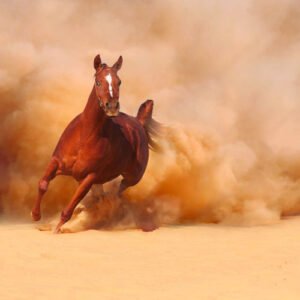
A reddish or light-brown horse the Prophet ﷺ purchased from a Bedouin of Banu Juhaina for ten camels. It was known for its incredible speed, and the Prophet ﷺ used to race it often.
7. Al-Ward (الورد)
The word Ward means “rose-colored” or reddish-brown. This horse was a gift from Tamim ad-Dari (رضي الله عنه). The Prophet ﷺ used it during battles, and later gifted it to ‘Umar ibn al-Khattab (رضي الله عنه).
8. Al-Bahr (البحر)
Meaning “the sea,” it was called so for its swift and smooth movement. The Prophet ﷺ bought it from Yemeni traders and raced it several times. Once, when it stumbled and knelt, the Prophet ﷺ lovingly stroked its head.
9. Other Reported Horses
Some sources mention additional names like Al-Malah, Al-Bahjah, At-Tarf, An-Najeeb, Al-Mandub, Adh-Dhu al-‘Aqal, Dhu al-Limmah, As-Sirhan, Al-Ya‘boob, and As-Sijil, bringing the total number up to twenty-three according to some historians.
The Place of Horses in Islam
The Qur’an honors horses as a sign of beauty and strength:
“And [He created] horses, mules, and donkeys for you to ride and for adornment. And He creates that which you do not know.”
(Surah An-Nahl, 16:8)
Horses were seen not only as a means of transportation but also as a symbol of dignity and divine blessing. They carried warriors in the path of Allah, and they were an adornment for the believer who treated them with mercy.
The Prophet ﷺ said:
“Horses are of three types: for one man, they are a reward; for another, a shield; and for a third, a burden…”
(Sahih al-Bukhari & Muslim)
He ﷺ explained that horses kept for jihad and service in Allah’s cause bring endless reward, even for their grazing, drinking, and droppings. Horses kept for status or beauty, without neglecting their rights, bring protection (sitr). But those kept for showing off and pride become a burden and sin for their owner.
The Blessing of Horses and Their Role Until the Last Day
In another hadith, the Prophet ﷺ said:
“Goodness is tied to the forelocks of horses till the Day of Resurrection.”
(Sahih al-Bukhari)
This means that horses will always remain a source of goodness, reward, and honor for those who use them for beneficial purposes — whether for defense, livelihood, or noble recreation.
Even in modern times, where horses are no longer the main means of warfare or travel, they remain symbols of courage, patience, and grace — qualities the Prophet ﷺ loved and encouraged.
Islamic Rulings Related to Horses
1. Raising and Breeding Horses
Islam encourages horse ownership and breeding when done for halal purposes, such as riding, work, or preparation for defense. However, races involving gambling or betting are strictly forbidden, as Allah says:
“O you who believe! Intoxicants, gambling, idols, and divining arrows are an abomination of Satan’s handiwork, so avoid them that you may be successful.”
(Surah Al-Ma’idah, 5:90)
2. Zakat on Horses
There is no zakat on horses unless they are kept for trade. In that case, they are treated like any other trade goods. The Prophet ﷺ said:
“There is no zakat on a Muslim’s slave or horse.”
(Sahih Muslim)
This ruling shows Islam’s fairness — the Prophet ﷺ exempted personal-use horses from financial burden.
Lessons from the Prophet’s Love for Horses
The Prophet ﷺ taught his followers compassion even towards animals. He fed and cared for his horses personally, ensuring they were well-treated. His example reminds us that true nobility lies in mercy, and that caring for animals — especially those used for beneficial purposes — is an act of worship.
His attachment to horses also teaches us the importance of strength with humility — to be prepared for challenges, yet gentle and just in treatment.
References
- Ibn al-Qayyim, Zad al-Ma‘ad fi Hadyi Khayr al-‘Ibad (Dar al-Kutub al-‘Ilmiyyah).
- Al-Nawawi, Sharh Sahih Muslim.
- Ibn Hajar al-‘Asqalani, Fath al-Bari.
- Abu Dawood, Sunan Abu Dawood, Book of Jihad.
- Sahih al-Bukhari, Kitab al-Jihad wa’l-Siyar.
- The Qur’an, Surah An-Nahl: 8; Surah Al-Ma’idah: 90.
- Mawdoo3.com
Written by
Ustadha Fahmina holds a Sanad in Alimiyyah (6-year Dars-e-Nizami) from two recognized Islamic institutes and a Master's degree in Arabic from Indira Gandhi National University. She teaches Qur'an, Tafsir, Hadith, and Fiqh following the Hanafi school within Ahl al-Sunnah wal Jama'ah. She founded Islam Hashtag in 2015 to bring authentic Islamic learning to Muslim families online. She also holds a degree in Optometry and is the founder of Optometryskills.com.
Discover more from Islam Hashtag
Subscribe to get the latest posts sent to your email.