Meaning of Masha Allah /mashallah meaning
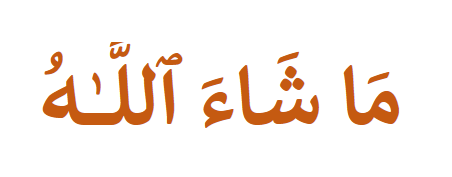
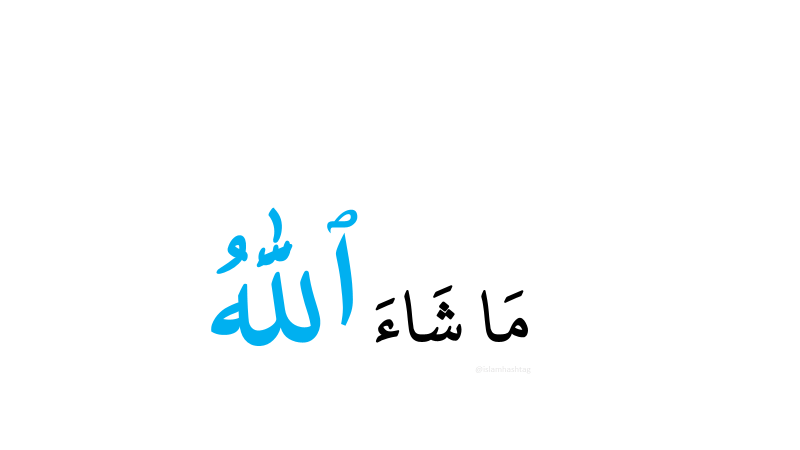
Masha Allah in arabic is written as مَا شَاءَ ٱللَّٰهُ .It is pronounced as ma-shaa-a-l-lah.
Mashallah meaning
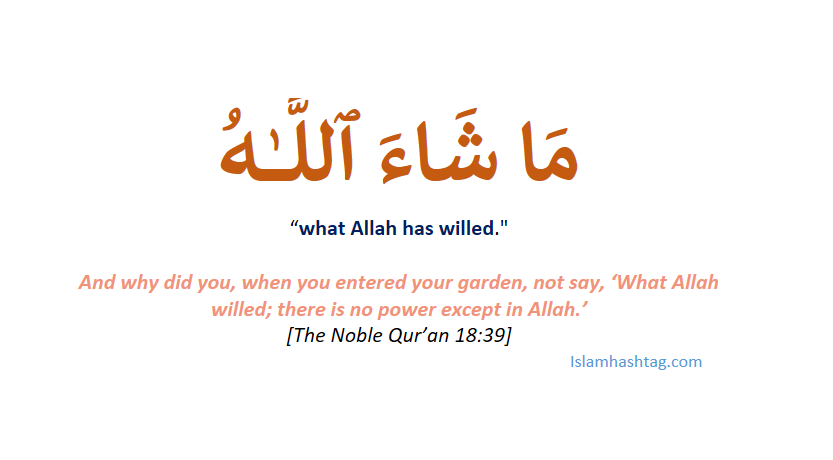
mashallah meaning :- “what Allah has willed.”
Other possible translations could be: “What Allah has wanted to happen,” “as Allah wills,” or “Allah willed it.”
| مَا | what |
| شَاءَ | wills |
| ٱللَّٰهُ | Allah |
Hukum of saying Masha Allah in Quran
Allah says in Quran:
And why did you, when you entered your garden, not say, ‘What Allah willed; there is no power except in Allah.’ [The Noble Qur’an 18:39]
Also Read The meaning of In Sha Allah, a Quranic study.
When should you say Masha Allah?
You should say Masha Allah when you see or hear something or someone that is good, beautiful, or impressive. For example, you can say it when you see a newborn baby, a stunning sunset, a successful achievement, a talented person, etc. Saying this phrase shows your admiration and appreciation for the creation of Allah. It also protects the person or thing from evil eye or envy by acknowledging that it is from the will of Allah.
What is the difference between Masha Allah and Alhamdulillah?
Masha Allah and Alhamdulillah are two common Islamic phrases that express gratitude and appreciation to Allah. However, they have different meanings and usages. Masha Allah means “what Allah has willed” or “as Allah has willed it”. It is used to praise or admire something or someone that is good, beautiful, or impressive. It is also used to ward off evil eye or envy. Alhamdulillah means “all praise is due to Allah” or “praise be to Allah”. It is used to thank or acknowledge Allah for His blessings, mercy, or guidance. It is also used to express satisfaction or happiness with something or someone .
Is Masha Allah a dua?
Masha Allah is not a dua, but rather a statement of praise and admiration. A dua is a supplication or invocation to Allah for something that one desires or needs. However, some people may use it as a part of their dua to acknowledge that everything is from the will of Allah and to ask for His protection and blessing.
What are the benefits of saying Masha Allah?
Saying Masha Allah has many benefits, such as:
- It shows one’s faith and submission to Allah and His will.
- It increases one’s gratitude and appreciation for Allah’s blessings and favors.
- It protects one from arrogance, pride, or self-admiration by attributing everything to Allah.
- It protects one from evil eye, envy, or jealousy by seeking refuge in Allah.
- It brings happiness, peace, and contentment to one’s heart and mind.
How do you respond to Masha Allah?
There is no specific or obligatory response to Masha Allah, but some possible responses are:
Alhamdulillah: This means “all praise is due to Allah” or “praise be to Allah”. It is a way of thanking and acknowledging Allah for His blessings and mercy.
Jazak Allahu Khayran: This means “may Allah reward you with good” or “may Allah bless you”. It is a way of expressing gratitude and appreciation to the person who said Masha Allah.
Barak Allahu Feek: This means “may Allah bless you” or “may Allah put barakah in you”. It is a way of asking Allah to grant the person who said Masha Allah more goodness and success.
Ameen: This means “so be it” or “may it be”. It is a way of agreeing and confirming the statement of Masha Allah.
What is the difference between Masha Allah and Insha Allah?
Answer: Masha Allah and Insha Allah are two common Islamic phrases that reflect one’s belief in the will and power of Allah. However, they have different meanings and usages. Masha Allah means “what Allah has willed” or “as Allah has willed it”. It is used to praise or admire something or someone that has already happened or exists. Insha Allah means “if Allah wills” or “God willing”. It is used to express one’s hope or intention for something that has not yet happened or does not exist.
A story explaining the meaning of Masha Allah
In a small village, there lived two sisters named Asma and Afsha. Asma was the younger sister, full of energy and always curious about the world around her. Afsha, on the other hand, was the wise and patient older sister, always ready to guide Asma in the right direction.
One sunny day, the sisters decided to visit a beautiful garden nearby. They heard that it was a place filled with colorful flowers, melodious birds, and sparkling streams. Asma’s eyes sparkled with excitement as they entered the garden. The moment she stepped inside, she couldn’t help but exclaim, “Wow! Look at all the flowers! They’re so beautiful!”
Afsha smiled and gently held Asma’s hand. “Asma, my dear sister,” she said, “whenever you see something beautiful, it’s important to remember the virtue of saying ‘Masha Allah.’ It means ‘God has willed it’ and reminds us of the blessings bestowed upon us.”
Asma looked at Afsha with a curious expression. “But why should we say ‘Masha Allah’?”
Afsha sat down on a nearby bench and patted the seat next to her, inviting Asma to sit down as well. “Let me tell you a story,” she said. “Our beloved Prophet Muhammad (peace be upon him) once said that when you see something beautiful, you should say ‘Masha Allah.’ It’s a way of expressing gratitude to Allah for the beauty He has created.”
Asma listened attentively as Afsha continued, “You see, Asma, saying ‘Masha Allah’ helps us appreciate the wonders of the world around us and reminds us that everything beautiful comes from Allah. It also safeguards us from feeling jealous or envious of others’ blessings.”
Asma nodded, absorbing the wisdom shared by her sister. From that day on, every time Asma saw something beautiful, she would say, “Masha Allah” with a smile on her face. She began to notice the intricate patterns on flowers, the sweet melodies of birds, and the peacefulness of the garden.
One day, as they were exploring a particularly enchanting part of the garden, they stumbled upon a majestic waterfall. The water cascaded down the rocks, creating a mesmerizing sight. Asma couldn’t help but gasp in awe.
“Masha Allah!” she exclaimed, her eyes shining with wonder.
Afsha smiled proudly at her sister. “Well done, Asma! You’ve truly understood the beauty of saying ‘Masha Allah.’ It fills our hearts with gratitude and reminds us of Allah’s endless blessings.”
As they continued their journey through the garden, Asma and Afsha encountered many more breathtaking sights—a butterfly with vibrant wings, a family of deer gracefully prancing, and a rainbow stretching across the sky. Each time, Asma would say, “Masha Allah,” and her heart would fill with joy.
Finally, as the sun began to set, painting the sky in shades of orange and pink, they found a cozy spot to sit and reflect on their day.
“Asma,” Afsha said, “remember that saying ‘Masha Allah’ not only brings us closer to Allah, but it also helps us appreciate the beauty in everything around us. It’s a reminder to be grateful for the blessings we have.”
Asma nodded, her eyes twinkling. “I understand now, Afsha. Saying ‘”Masha Allah’ is like a secret key that opens our hearts to the wonders of the world. It reminds us that everything we see is a gift from Allah, and we should cherish and be grateful for it.”
Afsha smiled, proud of her sister’s understanding. “You’ve learned well, Asma,” she said warmly. “Now, whenever you see something beautiful, whether it’s a flower, a sunset, or even a kind act from someone, remember to say ‘Masha Allah.’ It will fill your heart with gratitude and bring you closer to Allah.”
Asma nodded, her eyes brimming with gratitude. From that day forward, she made it a habit to say “Masha Allah” whenever she witnessed something beautiful. The more she practiced, the more her heart overflowed with joy and appreciation for the world around her.
Follow us in Facebook for daily updates
Written by

Ustadha Fahmina holds a Sanad in Alimiyyah (6-year Dars-e-Nizami) from two recognized Islamic institutes and a Master's degree in Arabic from Indira Gandhi National University. She teaches Qur'an, Tafsir, Hadith, and Fiqh following the Hanafi school within Ahl al-Sunnah wal Jama'ah. She founded Islam Hashtag in 2015 to bring authentic Islamic learning to Muslim families online. She also holds a degree in Optometry and is the founder of Optometryskills.com.
Discover more from Islam Hashtag
Subscribe to get the latest posts sent to your email.