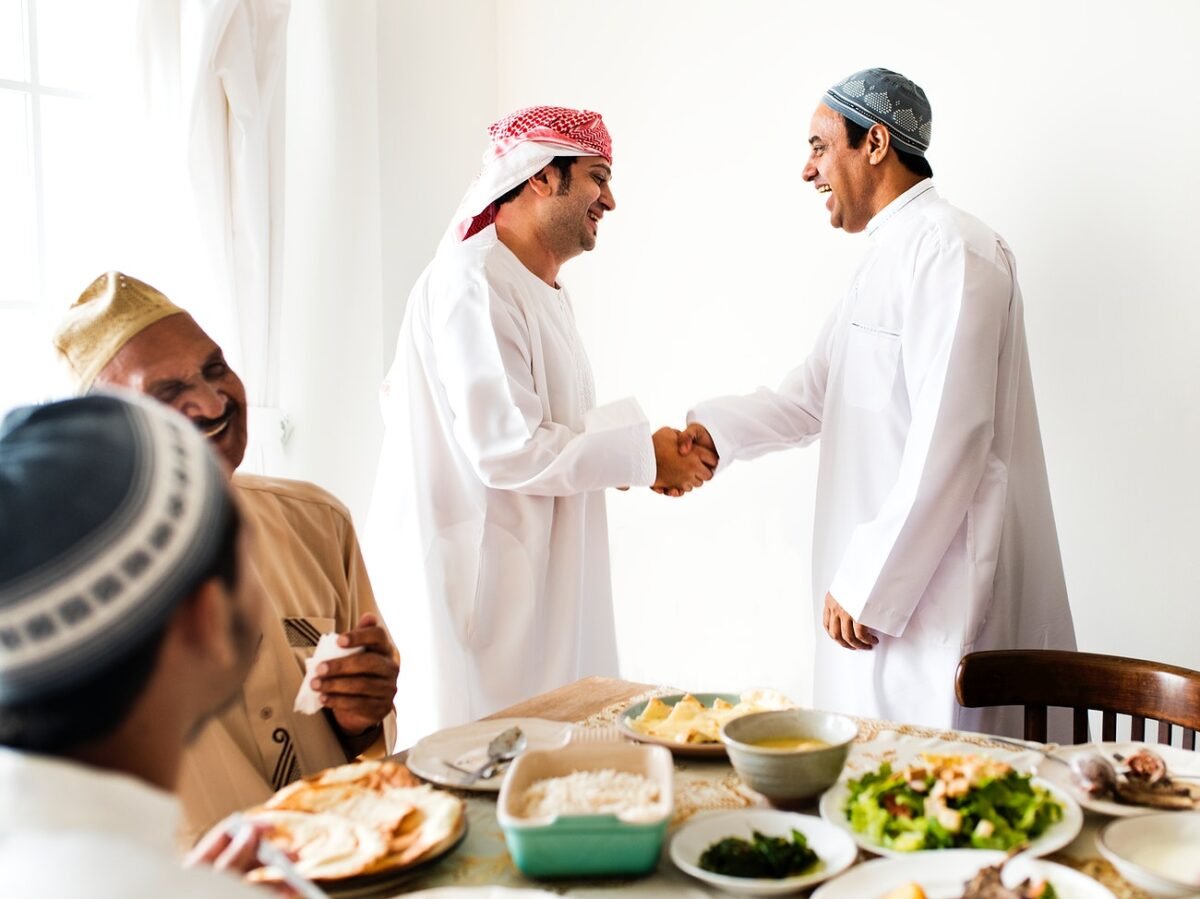
As salamu alaykum, Let us talk about the Islamic greeting ” As-salamu alaykum and walaikum salam ” with reference to the hadith of prophet (pbuh).
Assalamu Alaikum Warahmatullahi wabarakatuhu and walaikum assalam rahmatullahi wa barakatuh are the phrase to greet and reply by Muslims.
When we greet our fellow muslim we say-
السَّلَامُ عَلَيْكُمْ وَرَحْمَةُ ٱللَّهِ وَبَرَكاتُهُ
How do you pronounce As-Salaam-Alaikum?
Assalamu Alaikum Warahmatullahi wabarakatuhu
(as-salamu alaykum wa-raḥmatu llāhi wa-barakātuhu)
Translate as salamu alaykum from arabic: Meaning of Assalamu Alaikum Warahmatullahi wabarakatuhu in english
It means: (“Peace be upon you as well as Allah’s mercy and blessings.”)
What is the response on Salam Alaikum?
The response to salam alaikum/ The reply to As-salamu alaykum is :
(waʿalaykumu s-salām wa-raḥmatu llāhi wa-barakātuhu)
How to write walaikum assalam in arabic/ (walaikum assalam warahmatullahi wabarakatuh) in arabic
وَعَلَيْكُمُ ٱلسَّلَامُ وَرَحْمَةُ ٱللَّهِ وَبَرَكاتُهُ
And upon you be Allah’s mercy and blessings.”

Do you know the source of this greeting ? Who taught us this greeting? Let us talk about “salam” in detail.
Meaning of salam?
Salam means to be cleared or delivered from defects and shortcomings. As-Salaam is also
(an attribute or) a name of Allah, the Exalted, meaning: the being who is free of all defect,
harm, change and destruction – and also safe from them.
حَدَّثَنَا شِهَابٌ، قَالَ: حَدَّثَنَا حَمَّادُ بْنُ سَلَمَةَ، عَنْ حُمَيْدٍ، عَنْ أَنَسٍ قَالَ: قَالَ رَسُولُ اللهِ صلى الله عليه وسلم: إِنَّ السَّلامَ اسْمٌ مِنْ أَسْمَاءِ اللهِ تَعَالَى، وَضَعَهُ اللَّهُ فِي الأَرْضِ، فَأَفْشُوا السَّلامَ بَيْنَكُمْ.
Anas reported that the Messenger of Allah, may Allah bless him and grant him peace, said, “As-Salam (peace) is one of the Names of Allah Almighty which Allah has placed in the earth. Therefore give the greeting among yourselves.”(Al-Adab Al-Mufrad 989)
Most of the ulama (Scholars) hold that the words mean; ‘peace of Allah be on you.’ ‘you are
safe from me,’ and ‘keep me safe from you.’ In this sense, salaam will deemed to be derived
from( سلم) Salama to mean ‘well-being,’ ‘reconciliation.’ The expression would imply; ‘be
safe and secure from me and keep me to safe and secure.’
The Origin of Salam and the Reply of salam that was taught by Angels to Adam (AS)
Abu Hurairah (May Allah be pleased with him) reported:The Prophet (ﷺ) said, “When Allah created Adam (ﷺ), He said to him: ‘Go and greet that company of angels who are sitting there – and then listen to what they are going to say in reply to your greetings because that will be your greeting and your off-spring’s.’ Adam (ﷺ) said to the angels: ‘As-Salamu ‘Alaikum (May peace be upon you).’ They replied: ‘As-Salamu ‘Alaikum wa Rahmatullah (May peace be upon you and the Mercy of Allah).’ Thus adding in reply to him: ‘wa Rahmatullah (and the Mercy of Allah)’ to his greeting.” (Bukhari and Muslim)- Riyad as-Salihin 845
وعن أبي هريرة رضي الله عنه عن النبي صلى الله عليه وسلم قال: لما خلق الله تعالى آدم عليه السلام قال: اذهب فسلم على أولئك -نفر من الملائكة جلوس- فاستمع ما يحيونك، فإنه تحيتك وتحية ذريتك. فقال: السلام عليكم فقالوا: السلام عليك ورحمة الله، فزادوه: ورحمة الله” ((متفق عليه)).
Virtue of replying “walaikum salam” in full
Narrated ‘Imran bin Husain:”A man came to the Prophet (ﷺ) and said: ‘As-Salamu ‘Alaykum (Peace be upon you).'” [He said:] “So the Prophet (ﷺ) said: ‘Ten.’ Then another came and he said: ‘As-Salamu ‘Alaykum Wa Rahmatullah (Peace be upon you, and the mercy of Allah).’ So the Prophet (ﷺ) said: ‘Twenty.’ Then another came and said: ‘As-Salamu ‘Alaykum Wa Rahmatullahi Wa Barakatuh (Peace be upon you, and the mercy of Allah, and His Blessings).’ So the Prophet (ﷺ) said: ‘Thirty.'”(: Jami` at-Tirmidhi 2689
حَدَّثَنَا عَبْدُ اللَّهِ بْنُ عَبْدِ الرَّحْمَنِ، وَالْحُسَيْنُ بْنُ مُحَمَّدٍ الْحَرِيرِيُّ، بَلْخِيٌّ قَالاَ حَدَّثَنَا مُحَمَّدُ بْنُ كَثِيرٍ، عَنْ جَعْفَرِ بْنِ سُلَيْمَانَ الضُّبَعِيِّ، عَنْ عَوْفٍ، عَنْ أَبِي رَجَاءٍ، عَنْ عِمْرَانَ بْنِ حُصَيْنٍ، أَنَّ رَجُلاً، جَاءَ إِلَى النَّبِيِّ صلى الله عليه وسلم فَقَالَ السَّلاَمُ عَلَيْكُمْ . قَالَ قَالَ النَّبِيُّ صلى الله عليه وسلم ” عَشْرٌ ” . ثُمَّ جَاءَ آخَرُ فَقَالَ السَّلاَمُ عَلَيْكُمْ وَرَحْمَةُ اللَّهِ فَقَالَ النَّبِيُّ صلى الله عليه وسلم ” عِشْرُونَ ” . ثُمَّ جَاءَ آخَرُ فَقَالَ السَّلاَمُ عَلَيْكُمْ وَرَحْمَةُ اللَّهِ وَبَرَكَاتُهُ فَقَالَ النَّبِيُّ صلى الله عليه وسلم ” ثَلاَثُونَ ” . قَالَ أَبُو عِيسَى هَذَا حَدِيثٌ حَسَنٌ صَحِيحٌ غَرِيبٌ مِنْ هَذَا الْوَجْهِ . وَفِي الْبَابِ عَنْ عَلِيٍّ وَأَبِي سَعِيدٍ وَسَهْلِ بْنِ حُنَيْفٍ .
Ruling on salam/As-salamu alaykum and walaikum salam
It is sunnah (Holy Prophet’s practice) to offer salaam at the time of taking leave just .as it is to offer it on meeting. Also, it is wajib (obligatory) to give response to both these greetings. Some authorities maintain that it is mustahab (desirable) to offer salaam and respond to it while departing.
So, it is sunnah (Holy Prophet’s practice) to offer salaam but fard (compulsory) (or wajib (obligatory)) to give a response to it. If any one offers salaam a second time to the same people then it is not fard (compulsory) but mustahab (desirable)for them to respond.
حَدَّثَنَا عَبْدَةُ بْنُ عَبْدِ اللَّهِ، حَدَّثَنَا عَلِيُّ بْنُ الْقَاسِمِ، أَنْبَأَنَا هَمَّامٌ، عَنْ قَتَادَةَ، عَنِ الْحَسَنِ، عَنْ سَمُرَةَ بْنِ جُنْدُبٍ، قَالَ أَمَرَنَا رَسُولُ اللَّهِ ـ صلى الله عليه وسلم ـ أَنْ نُسَلِّمَ عَلَى أَئِمَّتِنَا وَأَنْ يُسَلِّمَ بَعْضُنَا عَلَى بَعْضٍ
It was narrated that Samurah bin Jundab said:“The Messenger of Allah (ﷺ) commanded us to greet our Imam with Salam, and to greet one another with Salam.”(Sunan Ibn Majah 922)
Reply to As-salamu alaykum when greeted by People of the Book- Jews and Christians:
We reply with- وَعَلَيْكُمْ :walaikum salam -Wa ‘alaikum(and also upon you).”
حَدَّثَنَا أَبُو بَكْرٍ، حَدَّثَنَا عَبْدَةُ بْنُ سُلَيْمَانَ، وَمُحَمَّدُ بْنُ بِشْرٍ، عَنْ سَعِيدٍ، عَنْ قَتَادَةَ، عَنْ أَنَسِ بْنِ مَالِكٍ، قَالَ قَالَ رَسُولُ اللَّهِ ـ صلى الله عليه وسلم ـ “ إِذَا سَلَّمَ عَلَيْكُمْ أَحَدٌ مِنْ أَهْلِ الْكِتَابِ فَقُولُوا وَعَلَيْكُمْ ” .
It was narrated that Anas bin Malik said “the Messenger of Allah(ﷺ) said”:”When any of the People of the Book greets you with Salam (peace), then say, Wa ‘alaikum(and also upon you).”
Adab of greeting-Who greets whom?

- The one who comes greets the Muslims that are present.
- The one who is riding greets the one who is walking.
- The one who is walking greets the one who is sitting.
- The smaller group greets the bigger group.
- The young greet the elders.
- Say the Salam greeting when arriving and leaving a gathering
حَدَّثَنَا مُحَمَّدٌ، أَخْبَرَنَا مَخْلَدٌ، أَخْبَرَنَا ابْنُ جُرَيْجٍ، قَالَ أَخْبَرَنِي زِيَادٌ، أَنَّهُ سَمِعَ ثَابِتًا، مَوْلَى عَبْدِ الرَّحْمَنِ بْنِ زَيْدٍ أَنَّهُ سَمِعَ أَبَا هُرَيْرَةَ، يَقُولُ قَالَ رَسُولُ اللَّهِ صلى الله عليه وسلم “ يُسَلِّمُ الرَّاكِبُ عَلَى الْمَاشِي، وَالْمَاشِي عَلَى الْقَاعِدِ، وَالْقَلِيلُ عَلَى الْكَثِيرِ ”.
Narrated Abu Huraira:
Allah’s Messenger (ﷺ) said, “The riding one should greet the walking one, and the walking one should greet the sitting one, and the small number of persons should greet the large number of persons.”(Sahih al-Bukhari 6232)
Reference:
1.Al-Adab Al-Mufrad 989
2.Riyad as-Salihin 845
3.Sunan Ibn Majah 922
4.Jami` at-Tirmidhi 2689
5. Sahih al-Bukhari 6232
6. image sourced from wikihow.
Also read – how do Muslims in different culture greet each other
Written by
Ustadha Fahmina holds a Sanad in Alimiyyah (6-year Dars-e-Nizami) from two recognized Islamic institutes and a Master's degree in Arabic from Indira Gandhi National University. She teaches Qur'an, Tafsir, Hadith, and Fiqh following the Hanafi school within Ahl al-Sunnah wal Jama'ah. She founded Islam Hashtag in 2015 to bring authentic Islamic learning to Muslim families online. She also holds a degree in Optometry and is the founder of Optometryskills.com.
Discover more from Islam Hashtag
Subscribe to get the latest posts sent to your email.