
Last updated:
رَبِّ ارْحَمْهُمَا كَمَا رَبَّيَانِي صَغِيرًا-Rabbi irhamhuma kama rabbayani sagheera Dua for parents
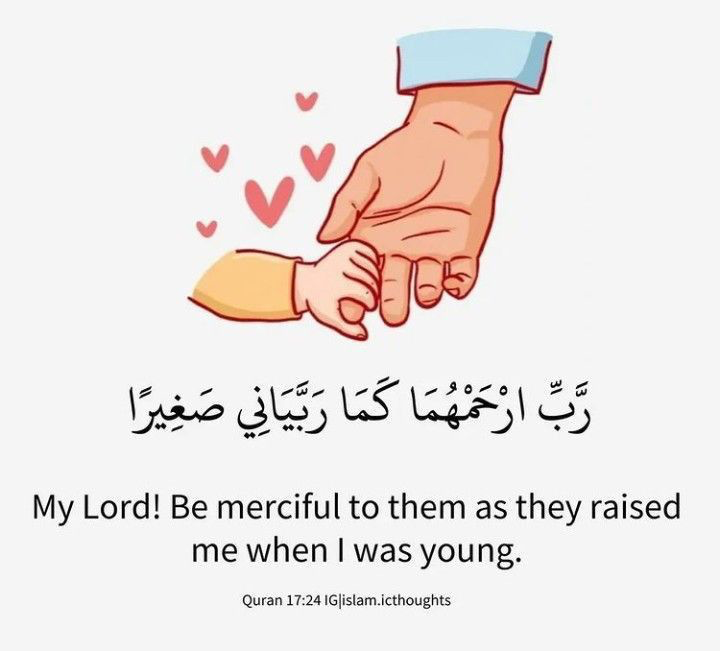
رَبِّ ارْحَمْهُمَا كَمَا رَبَّيَانِي صَغِيرًا
Rabbir hamhumaa kamaa rabbayaanee sagheera
“My Lord, have mercy upon them as they brought me up [when I was] small.”
All praise is due to Allah, and peace and blessings be upon the Messenger of Allah. Allah, the Exalted, said regarding parents:
(وَقَضَى رَبُّكَ أَلَّا تَعْبُدُوا إِلَّا إِيَّاهُ وَبِالْوَالِدَيْنِ إِحْسَانًا إِمَّا يَبْلُغَنَّ عِنْدَكَ الْكِبَرَ أَحَدُهُمَا أَوْ كِلَاهُمَا فَلَا تَقُلْ لَهُمَا أُفٍّ وَلَا تَنْهَرْهُمَا وَقُلْ لَهُمَا قَوْلًا كَرِيمًا . وَاخْفِضْ لَهُمَا جَنَاحَ الذُّلِّ مِنَ الرَّحْمَةِ وَقُلْ رَبِّ ارْحَمْهُمَا كَمَا رَبَّيَانِي صَغِيرًا)
(الإسراء: 23–24)
Translation:
“And your Lord has decreed that you worship none but Him, and that you show kindness to parents. If one or both of them reach old age with you, do not say to them even ‘uff,’ nor rebuke them, but speak to them a noble word. And lower to them the wing of humility out of mercy and say: ‘My Lord, have mercy upon them as they raised me when I was small.’” (Al-Isra: 23–24)
If this indicates anything, it indicates the عظيمة (greatness) of their right, and the عظيمة (severity) of the sin of the one who is undutiful to one or both of them.
(وَلَا تَنْهَرْهُمَا)
“Do not rebuke them.”
The scholars said: He forbade harming them especially in old age, although harming them is forbidden at all times — because in old age there appears from them that which may cause irritation, and their need for service increases.
(وَقُلْ لَهُمَا قَوْلًا كَرِيمًا)
“Speak to them a noble word.”
Meaning: gentle, soft, the best words you can find.
Sa‘id ibn al-Musayyib said: “It is the speech of a humble servant to a harsh master.”
(وَاخْفِضْ لَهُمَا جَنَاحَ الذُّلِّ مِنَ الرَّحْمَةِ)
“And lower to them the wing of humility out of mercy.”
Ibn al-Jawzi رحمه الله said: “Lowering the wing is an expression for calmness, abandoning arrogance and refraining from harm.”
A man once came seeking permission from the prophet ﷺ to go for jihad. He said to him:
(أَحَيٌّ وَالِدَاكَ؟)
“Are your parents alive?”
He replied: “Yes.”
He said:
(فَفِيهِمَا فَجَاهِدْ)
“Then strive in their service.”
(Agreed upon)
And he ﷺ said:
(لَا يَجْزِي وَلَدٌ وَالِدًا إِلَّا أَنْ يَجِدَهُ مَمْلُوكًا فَيَشْتَرِيَهُ فَيُعْتِقَهُ)
“A child can never repay his parent unless he finds him enslaved, buys him, and sets him free.”
(Narrated by Muslim)
A man who had killed a woman came to Ibn ‘Abbas asking: “Is there repentance for him?”
He said: “Is your mother alive?”
He replied: “No.”
He said: “Repent to Allah, the Mighty and Majestic, and draw close to Him as much as you can.”
Ibn ‘Abbas was later asked: “Why did you ask him whether his mother was alive?”
He said: “I do not know of any deed closer to Allah than righteousness to one’s mother.”
‘A’ishah رضي الله عنها said:
“There were two men among the companions of the Messenger of Allah who were the most dutiful to their mothers in this Ummah: ‘Uthman ibn ‘Affan and Harithah ibn al-Nu‘man. As for ‘Uthman, he said: ‘I was never able to look directly at my mother’s face after I accepted Islam (out of shyness and reverence).’ As for Harithah, he used to feed her with his own hand and never asked her to repeat herself. After leaving her, he would ask those around her: ‘What did my mother say?’”
Hujr ibn ‘Adi used to feel for his mother’s bedding with his hand, fearing that the roughness of his hand might hurt her. He would first turn the bedding over, and once assured there was nothing harmful, he would lay her down.
Dhubyan ibn ‘Ali, one of the most dutiful to his mother, once spent the night standing on his feet because something was resting on her chest. He disliked waking her and disliked sitting down. When he became weak, two of his servants supported him until she woke up on her own.
Muhammad ibn Sirin would not speak a single word to his mother without humility.
Muhammad ibn al-Munkadir would place his cheek on the ground and say to his mother: “Place your foot upon it.”
Bishr al-Hafi said:
“A son drawing close to his mother so that he hears her voice is better than one who strikes with his sword in the path of Allah. Looking at her is better than everything.”
Muhammad ibn Muhayriz said:
“Whoever walks ahead of his father has been undutiful to him — unless he walks ahead to remove harm from his path. And whoever calls his father by his name or nickname has been undutiful — unless he says: ‘O my father.’”
Ibn al-Jawzi said:
“Woe, all woe to the one who is undutiful to his parents. Shame, all shame to the one whose parents die while angry with him. Woe to him! Is the reward of kindness anything but kindness in return? Do you now follow your negligence of their rights with sighing and regret?”
(وَقُلْ رَبِّ ارْحَمْهُمَا كَمَا رَبَّيَانِي صَغِيرًا)
“My Lord, have mercy upon them as they raised me when I was small.”
How many nights did they stay awake with you until dawn, caring for you like a lover cares in separation? If you fell ill, they shed tears that did not cease to flow. By Allah, they were not pleased for your upbringing with anything less than their own hands and even stones as your bed.
(وَقُلْ رَبِّ ارْحَمْهُمَا كَمَا رَبَّيَانِي صَغِيرًا)
Will you respond to kindness with wrongdoing? Does humanity not feel shame before true humanity? How can you oppose their beautiful favor with ugly disobedience, then raise your voice loudly against them?
(وَقُلْ رَبِّ ارْحَمْهُمَا كَمَا رَبَّيَانِي صَغِيرًا)
You love your children naturally — so love your parents by the command of Shari‘ah. Care for the root that gave you branches. Remember their gentleness with you, and the goodness of your early upbringing.
(وَقُلْ رَبِّ ارْحَمْهُمَا كَمَا رَبَّيَانِي صَغِيرًا)
Give charity on their behalf if they have passed away. Pray for them. Fulfill their debts. Seek forgiveness for them. Continue to repeat these two words — and you are not burdened except with something easy:
(وَقُلْ رَبِّ ارْحَمْهُمَا كَمَا رَبَّيَانِي صَغِيرًا)
“My Lord, have mercy upon them as they raised me when I was small.”
Also read – 5 Dua for Parents
Translated from Arabic , fath news.
The benefit/ Significance of Reciting Rabbi irhamhuma kama rabbayani sagheera Dua
1. It is a direct command from Allah
This du‘ā’ is not optional advice — it is part of a divine instruction that comes immediately after the command to worship Allah alone and to be kind to parents. That placement itself shows how immense their right is. When you recite it, you are obeying Allah consciously.
2. It nurtures humility in the heart
The verse connects mercy with remembrance: “as they raised me when I was small.”
When you reflect on your helpless childhood — your sickness, your crying, your sleepless nights — it softens arrogance. It breaks ego. It revives gratitude.
Reciting it regularly reforms the heart.
3. It is a continuous act of righteousness (Birr)
Even if you are unable to serve them physically, this du‘ā’ remains open. The Prophet ﷺ taught that a child’s du‘ā’ benefits parents after their death. So this supplication becomes:
- A form of obedience
- A form of charity
- A form of loyalty
- A means of raising their ranks in the Hereafter
4. It repairs strained relationships
Sometimes relationships with parents are not emotionally easy. This du‘ā’ shifts your focus from their flaws to their sacrifices. You stop counting hurts — you start remembering mercy.
That inner shift changes behavior.
5. It brings barakah into your own children
Scholars often mention that righteousness to parents returns to you through your own children. When you ask Allah to show mercy to your parents, you are planting mercy into your own future.
As you show compassion upward, Allah sends compassion downward.
6. It protects from regret
Many people only realize the weight of this verse after their parents are gone. Reciting it daily protects you from future regret. It keeps the relationship alive through du‘ā’, even after death.
When Should You Recite It?
- After salah
- In sujood
- During tahajjud
- When you feel irritated — to soften your heart
- After their passing — consistently
It is a short du‘ā’, but its meaning carries a lifetime of gratitude.
Also read: walikum us salam
Also read: the discipline of the soul: imam al-ghazali's four principles for reforming the nafs
Also read: tabarakallah meaning
Also read: dua for sick parents
Also read: dua for father
Also read: tasbih counter
Discover more from Islam Hashtag
Subscribe to get the latest posts sent to your email.