
 By Fahmina
Dua and Adhkar Daily Tracker: Essential Adhkar & Du’as
We all have good intentions when it comes to dhikr. You tell yourself: today I’ll be consistent, today I won’t forget my morning adhkar, today I’ll actually count properly. And then life happens.
The truth is, maintaining a daily routine of du’a and adhkar is one of the most rewarding — and one of the most underrated — practices in a Muslim’s life. But it’s also one of the easiest to let slip. That’s exactly why a Dua and Adhkar Daily Tracker can be such a game-changer.
Whether you’re trying to build a consistent habit, teach your children the love of dhikr, or simply keep track of your daily wird — having a structured system makes everything easier. Let’s walk through the essential adhkar and du’as every Muslim should know, and how to track them meaningfully.
Start Tracking Your Adhkar Today
If you’re looking for a simple, clean, and meaningful tool to help you stay consistent with your daily dhikr — we’ve built exactly that.
👉 Try the Dhikr & Tasbih Counter on Islam Hashtag
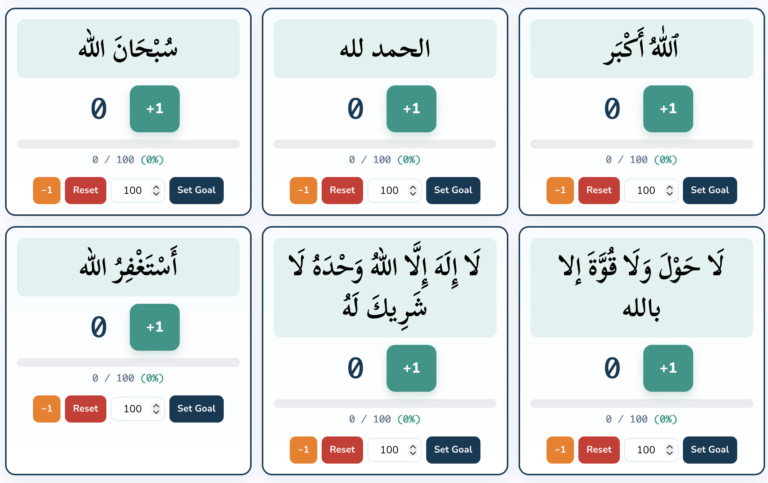
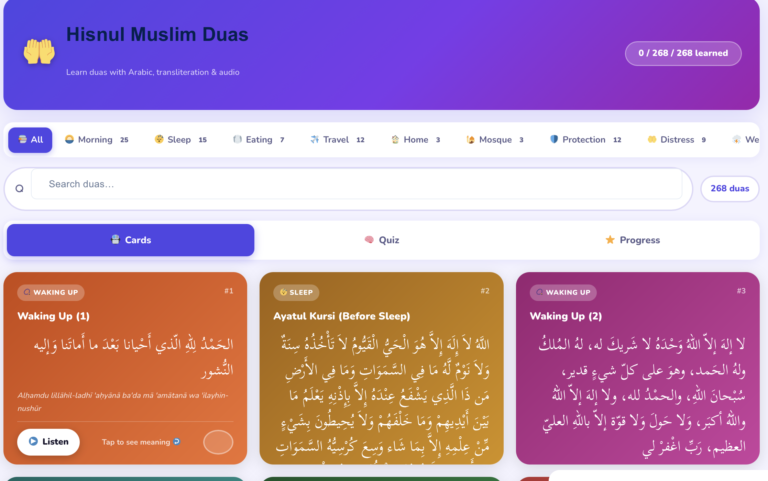
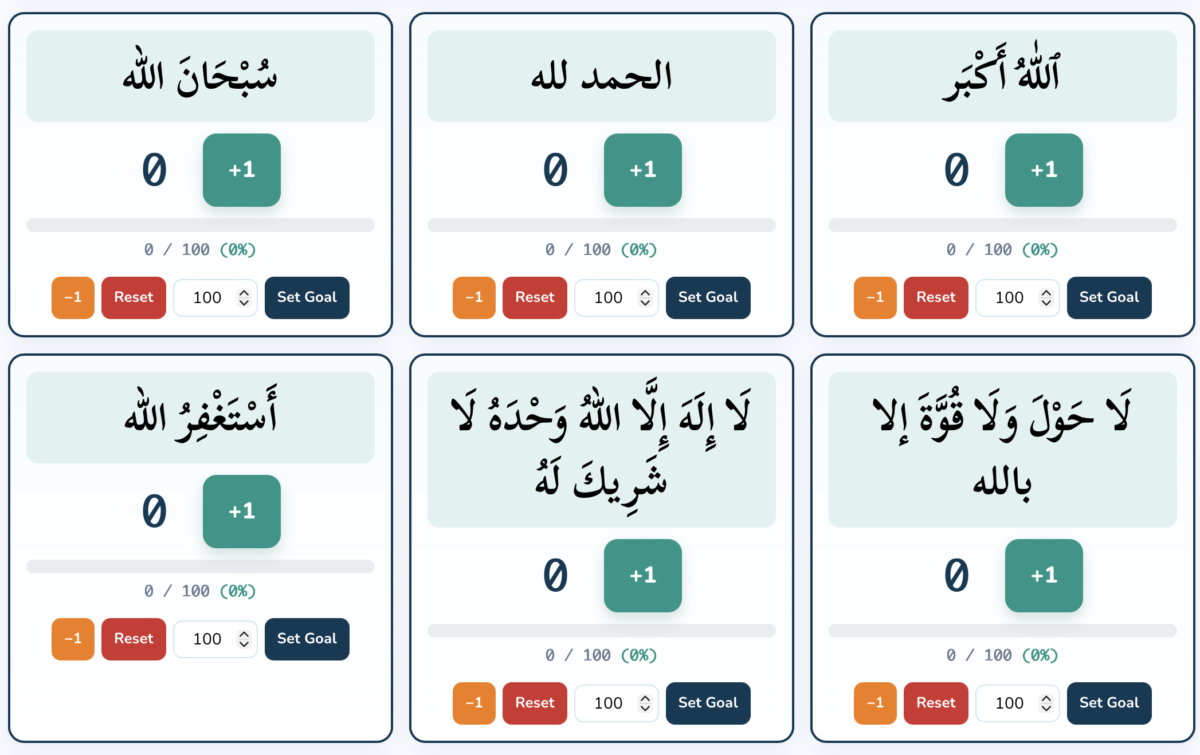
It includes the essential adhkar listed above, with Arabic text, transliterations, meanings, and a built-in counter. You can use it on your phone, tablet, or desktop — whenever the moment calls for remembrance.
Because the moment always calls for remembrance.
Why Tracking Your Adhkar Actually Matters
Before we get into the list of adhkar, let’s be honest about something: most of us forget.
We forget because we’re busy. We forget because we don’t have a system. And sometimes we forget because we don’t fully appreciate what we’re leaving on the table.
Consider this: the prophet ﷺ recited istighfar between 70 and 100 times a day — and he was already forgiven. If the best of creation kept a consistent count, surely there’s wisdom in us doing the same.
Tracking your adhkar isn’t about being mechanical or robotic. It’s about being intentional. Every time you tap a counter, you’re making a conscious choice to remember allah. And that intention is itself an act of worship.
The Essential Adhkar & Du’as Every Muslim Should Know
Here are 12 of the most powerful and rewarding adhkar from the Sunnah, along with their meanings and the incredible rewards attached to them.
1. Subḥānallāh — سُبْحَانَ اللَّهِ
“Glory be to Allah.”
According to a hadith in Tirmidhī, every time you say this, a tree is planted for you in Paradise. Imagine how many trees you could have. Say it walking to the kitchen. Say it waiting for your coffee. Say it whenever silence fills the room.
2. Al-ḥamdu lillāh — الْحَمْدُ لِلَّهِ
“All praise is due to Allah.”
This phrase fills the scales with reward on the Day of Judgment (Muslim). It’s the most natural response to every blessing — and when you’re tracking it, you start noticing just how many blessings surround you every single day.
3. Allāhu Akbar — اللَّهُ أَكْبَرُ
“Allah is the Greatest.”
Greater than your worries. Greater than your deadlines. Greater than whatever is making you anxious right now. A hadith in Muslim tells us this phrase is greater than everything upon which the sun rises. Say it and mean it.
4. Astaghfirullāh — أَسْتَغْفِرُ اللَّهَ
“I seek forgiveness from Allah.”
This is one of the most underused treasures in our spiritual toolkit. The Prophet ﷺ would seek forgiveness 70 to 100 times daily — not because he sinned, but because he understood the beauty of returning to Allah. This phrase alone can lift the heaviness you carry.
5. Lā ilāha illallāhu waḥdahu lā sharīka lah
“There is no deity except Allah, alone without partner.”
Reciting this 100 times is equivalent — according to Bukhārī and Muslim — to freeing ten slaves, earns 100 good deeds, erases 100 sins, and grants you protection from Shayṭān for the entire day. One hundred times. That’s under ten minutes of focused dhikr.
6. Lā ḥawla wa lā quwwata illā billāh
“There is no power and no strength except with Allah.”
This is described in Bukhārī and Muslim as a treasure from the treasures of Paradise. Say it when you feel powerless. Say it when you feel overwhelmed. It’s a reminder that you were never supposed to carry things alone.
7. Subḥānallāhi wa biḥamdih, subḥānallāhil-ʿaẓīm
“Glory be to Allah and His is the praise; Glory be to Allah the Magnificent.”
Two beloved phrases, described in Bukhārī and Muslim as light on the tongue, but heavy on the scales. Easy to say. Immense in reward.
8. Ṣalawāt upon the Prophet ﷺ
Allāhumma ṣalli ʿalā sayyidinā Muḥammad wa ʿalā āli sayyidinā Muḥammad
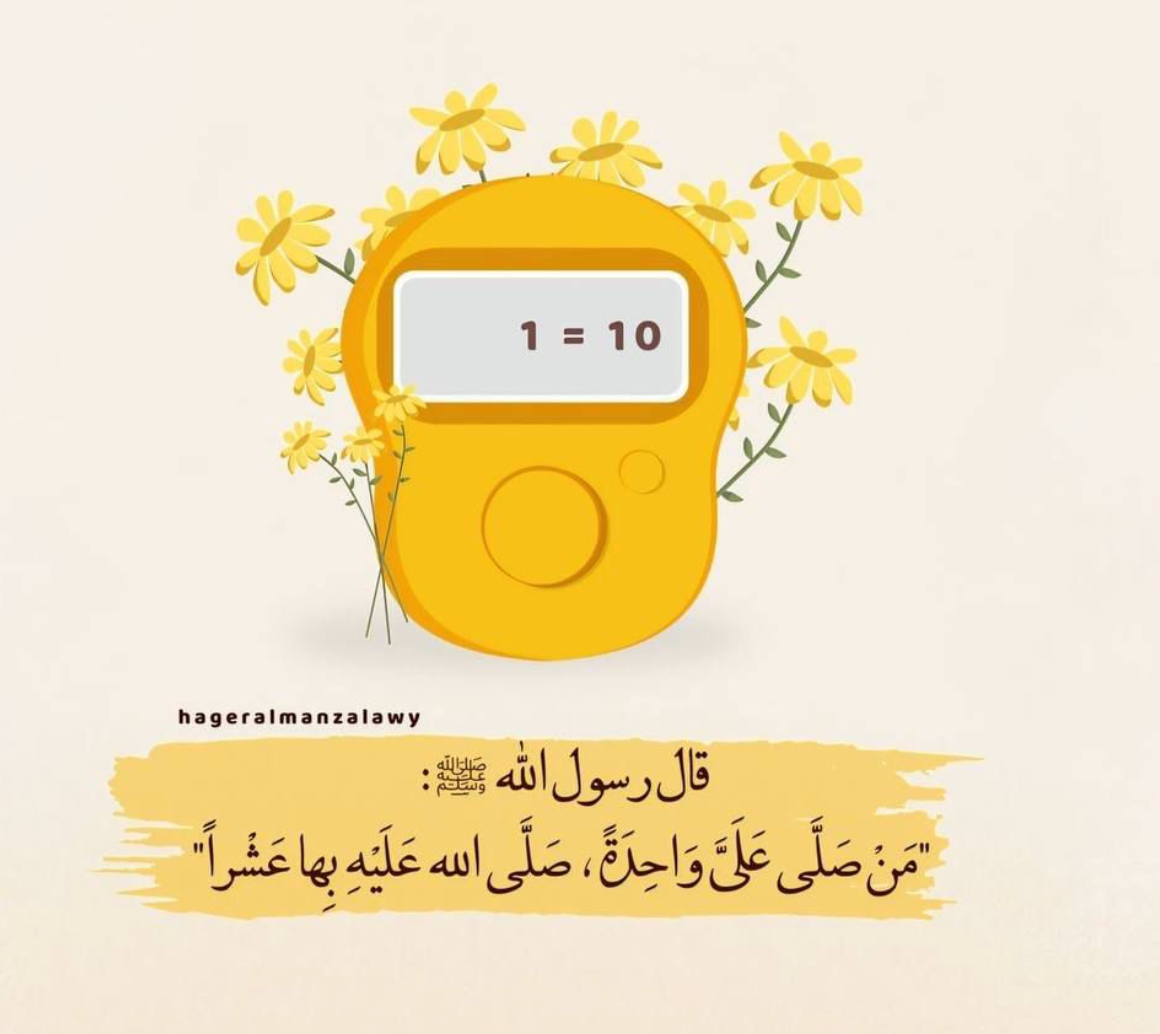
One ṣalawāt brings ten blessings from Allah, erases ten sins, and raises you ten ranks (Muslim). Ten for one. Every single time.
9. Du’ā of Prophet Yūnus عليه السلام
Lā ilāha illā anta subḥānaka innī kuntu minaẓ-ẓālimīn
“There is no deity except You; Glory be to You — indeed I was of the wrongdoers.”
This was recited in the belly of the whale. In the darkest place imaginable. And Allah answered. Whoever recites this in hardship, Allah will relieve him (Tirmidhī). If you’re going through something right now, make this part of your daily tracker.
10. Ḥasbunallāhu wa niʿmal-wakīl
“Allah is sufficient for us, and the best Disposer of affairs.”
These were the words of Prophet Ibrāhīm عليه السلام when he was thrown into fire. The words of the Prophet ﷺ at Uḥud. When everything seems against you, these words are your anchor.
11. Yā Ḥayyū Yā Qayyūm, biraḥmatika astaghīth
“O Ever-Living, O Sustainer — by Your mercy I seek help.”
A powerful du’ā for relief. Call upon the two names of Allah that describe His eternal life and His sustenance of all creation. Then ask. Then trust.
12. The Complete Istighfār
Astaghfirullāhal-ʿaẓīma alladhī lā ilāha illā huwa al-ḥayyu al-qayyūmu wa atūbu ilayh
According to Abū Dāwūd and Tirmidhī, whoever recites this will have their sins forgiven — even if they had fled from battle. The mercy in this is extraordinary. There is no hole deep enough that this du’ā cannot reach.
How to Use a Daily Adhkar Tracker Effectively
Here’s the honest reality: knowing the adhkar is just the first step. Building the habit is where most people struggle.
A good Dua and Adhkar Daily Tracker helps you:
- Set a target — decide on a minimum count for each dhikr per day
- Track your progress — see your streaks and your growth over time
- Stay consistent — even 5 minutes of focused dhikr daily is better than an hour once a week
- Feel motivated — watching your count grow is genuinely encouraging
The best kind of tracker combines the Arabic text, transliteration, meaning, and a tap counter — so you’re reciting with understanding, not just completing a number.
A Special Idea for Parents: Turn Adhkar into a Family Game
One of the most beautiful ways to use a dhikr tracker is with your children.
Create individual profiles for each child. Every time they complete their daily adhkar, their points are saved. At the end of the week or month, the child with the highest tasbīḥ count receives a small gift or treat.
Suddenly, dhikr becomes something children look forward to. They compete in goodness, they learn the words of Allah’s remembrance, and — most importantly — they’re building habits that fill their scales of good deeds for the Ākhirah.
Make it joyful. Make it a race toward something beautiful.
May Allah make us among those whose tongues are always moist with His remembrance. Āmīn.
Looking for Islamic Resources for Children: Check our Islamic Courses for children