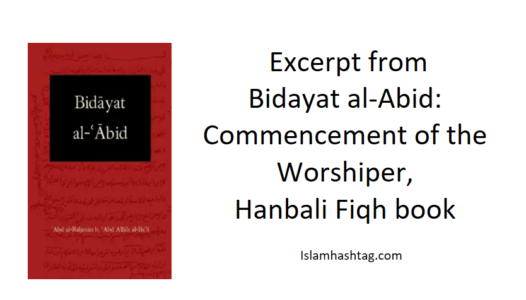
Excerpt from Bidayat al-Abid: Commencement of the Worshipper.
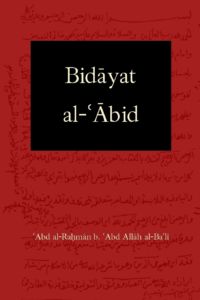
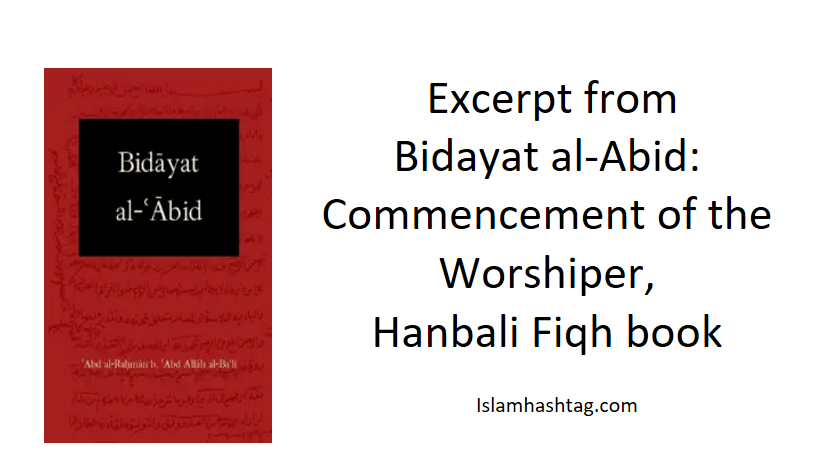
Bidayat al-Abid: Commencement of the Worshiper , Hanbali Fiqh book
Bidyat al-Abid is a beginner level book of Hanbali fiqh
Bidayat al-Abid is a dual language presentation of Imām al-Baʿli’s, Bidāyat al-ʿĀbid wa Kifāyat al-Zāhid
About the Author: Imām ʿAbd al-Rahṃ ān al-Baʿli
Imām ʿAbd al-Rahṃ ān b. ʿAbd Allāh b. Ahṃ ad al-Hạ labi al-Dimashqi al-Hạ nbali, a distinguished shaykh, jurist, scholar, and skilled Imām, was born on 21 Jumādā al-Ūlā, 1110H in Baʿlabak. His lineage was steeped in knowledge, with his father, grandfather, and great-grandfather being revered scholars, along with his esteemed brothers Shaykh Muhạ mmad al-Hạ nbali and Shaykh Ahṃ ad, the author of al-Rawd ̣al-Nadā.
Imām ʿAbd al-Rahṃ ān’s educational journey began early, completing the study of the Qurʾān with his father by the age of 10. Under the guidance of his first teacher, Shaykh ʿAwwād al-Hạ nbali al-Nābulsi, he delved into Arabic grammar and Fiqh, studying al-Ājrūmiyyah and Akhsạr al-Mukhtasạrāt/The Supreme Synopsis.
After his father’s passing, Imām ʿAbd al-Rahṃ ān continued his studies under the tutelage of his brother, Shaykh Abu al-Muwāhib al-Hạ nbali, and later with the scholar Abd al-Qadir al-Taghlibi al-Hạ nbali, author of Nayl al-Maʾārib. His quest for knowledge extended to lessons with Shaykh Ismāʿīl al-Ajlūni on Sahị̄h ̣ al-Bukhāri, where he earned a general ijāzah.
Imām ʿAbd al-Rahṃ ān furthered his studies in Aleppo, acquiring knowledge in Hạ dīth, Logic, Usūl, Grammar, and Rhetoric. His dedication to learning earned him praise from many scholars, and he possessed the shortest chain of narration to Sahị̄h ạ l-Bukhāri.
Known for his proficiency in various Islamic sciences, Imām al-Baʿli authored several notable works, including an abridgement of al-Jāmiʿ al-Sạ ghīr of al-Suyūti called Nūr al-Akhyār wa Rawd ̣ al-Abrār fi Hạ dīth al-Nabi al-Mustạfā al-Mukhtār. He also penned explanations and concise manuals on worship, Fiqh, and Arabic grammar.
Imām ʿAbd al-Rahṃ ān al-Baʿli remained in Aleppo, supported by righteous individuals, until his passing in 1192H. May Allāh shower him with mercy for his lifelong dedication to the pursuit of knowledge.
Introduction
Sheikh Abdul Rahman al-Ba’li opens the book by saying,
بِسْمِ اللَّهِ الرَّحْمَنِ الرَّحِيمِ
الحَمْدُ للَّهِ الذي فَقَّه في دينهِ مَنْ شَاءَ مِنَ العِبَادِ، وَوَفَّقَ أَهَلَ طَاعَتِهِ لِلْعِبَادَةِ والسَّدَادِ، والصَّلاَةُ والسلامُ على سيِّدنا مُحمدٍ الهَادِي إِلى طريقِ الرَّشَادِ، وعَلَى آله وأصحابهِ السَّادَةِ القَادَةِ الأَمْجَادِ، وعَلَى تَابِعيهم بإِحسانٍ صَلاَةً دَائِمَةً مُتَّصِلَة إِلى يَومِ المَعَادِ.
أَمَّا بَعْد:
فَقَد اسْتَخَرْتُ اللَّهَ في جَمْعِ مُخْتَصَر مُفيد، مُقْتَصِرًا فِيهِ عَلَى العِباداتِ تَرْغيبًا للمُرِيدِ، وتقريبًا لِلمُستفيدِ، في فِقْهِ الِإمامِ المُبَجَّلِ، أبي عبد الله أحمد بن مُحمَّد بن حَنْبَل، وَسَمَّيْتُهُ: «بِدَاية العَابِدِ وكِفَاية الزَاهِدِ»، ومِنَ اللَّهِ تعالى أرتجي له القبولَ والنفْع لكُل مَن اشتغلَ به مِنْ سائلٍ ومسؤول، إِنه أكْرَمُ مَأْمُول.
“In the name of Allah the Most Gracious. Most-Merciful All praise belongs to Allah who bestows understanding of the faith upon whom He wills from the slaves and grants the ability to the obedient for ibadah and uprightness We ask Allah for eternal and continuous prayers and peace for our master Muhammad. the guide to the path of truth, for his family, his honourable leading and exemplary companions, and all who perfectly follow them until the Day of Return.
I have sought Allah’s guidance in authoring a beneficial and concise manual restricted to the acts of worship based on the jurisprudence of the venerated Imam Abu Abdullah Ahmad bin Hanbal to encourage the disciple and grant access to those seeking benefit. I have called it, ‘Bidayatul Abid wa Kifayat al-Zahid’. I request that Allah accept it and to benefit everyone, both inquirer and inquired of, who busies themselves with it, for indeed He is the most generous in whom to place one’s hope.”
A beginner’s book of Hanbali Fiqh-
I find the book very busy to understand. It had the legal ruling of the Fiqh of Hanbali madhab very beautifully summarised in Arabic as well as English text.
So it has Arabic text and then the English translation. It has the important terms explained at the end of the book so this facilitate both the advanced and the beginners.
For Instance ,
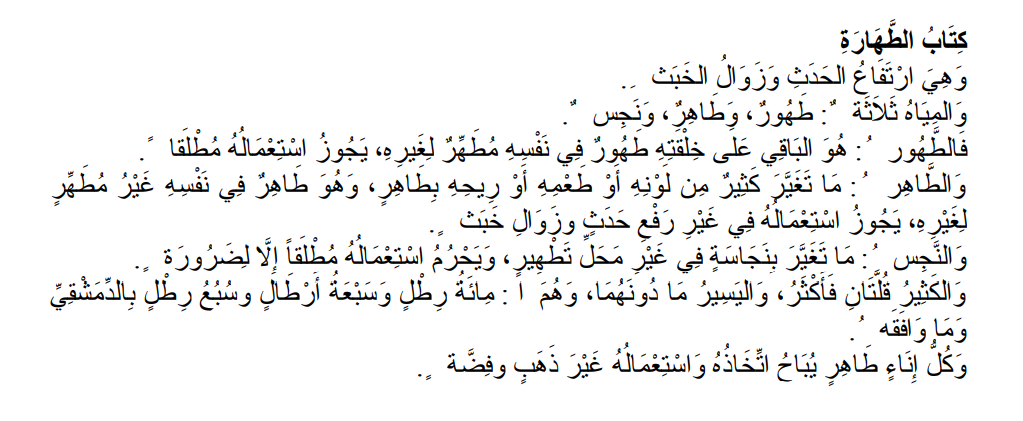
It says about Purification:
كتاب الطهارة
ارْتِفَاعُ الْحَدَثِ، ومَا في مَعْنَاهُ، وَزَوَالُ الخَبَثِ
والمياه ثَلاَثَة:
طَهورٌ، وطَاهِرٌ، ونَجِسٌ.
فالطهورُ: هو الباقي على خِلْقتِهِ طَهُورٌ في نفسِهِ مُطهِّر لغيره، يَجُوزُ استعمالُهُ مطلقًا.
والطاهرُ: ما تَغَيَّرَ كثير من لَوْنِهِ أو طَعْمِهِ أَوْ ريحِهِ بِطَاهِرِ، وهو طَاهِر في نفسه غيرُ مطهِّرِ لِغَيْرِهِ، يَجوزُ استعمَالُهُ في غَيْرِ رَفْعِ حَدَثِ وزَوَالِ خَبَثِ.
والنَجسُ: ما تَغَيَّرَ بِنَجَاسَةٍ في غَيْرِ مَحَلِّ تطهير، ويَحْرُمُ استعمالُهُ مطلقًا إِلاَّ لضرورة.
والكَثيرُ قُلَّتَانِ فَأَكْثَرَ، واليَسيرُ ما دونَهُمَا، وهما: مائةُ رطْلٍ وسبعةُ أرطالٍ وسُبُعُ رِطْلٍ بالدمشقي وما وافَقَهُ.
Purification : It is the removal of a hạdath(1) and elimination of a khabath.(2)
Water is of three types: tạhūr; tạ̄hir; and najis.
- Tạhūr is what remains in its natural state. It is intrinsically pure and an abluent. It is categorically permissible to use.
- Tạ̄hir is what has greatly changed in color, taste, or odor due to a tạ̄hir object. It is intrinsically pure, but not an abluent. It is permissible to use, except to remove a hạdath or a khabath.
- Najis[3]is what has changed due to najāsah[4], except on the location being purified. It is categorically impermissible to use, unless in dire need[5]
- An abundant amount is two qullahs or more and a meager amount is lesser than that. They are equivalent to 107.7 Damascus pounds or whatever is comparable[6].
Tạ̄hir vessels are permissible to keep and use, as long as they are neither gold nor silver.
Fiqh of Wudu/ wudhu (Summary) , What breaks the wudu?
Definitions of Key Terms in Islamic Jurisprudence
Understanding certain terms is crucial in Islamic jurisprudence. Here are concise explanations of key terms:
[1] Ḥadath
Definition: A state which prevents one from prayer, etc.
[2] Najāsah
Definition: Synonym of najāsah.
[3] Tạ̄hir
Definition: The opposite of tạ̄hir.
[4] Nājis
Definition: Every substance which is impermissible to handle, not due to it being sacred, regarded as filthy, or it being harmful to the body or mind. It is also defined as every substance which requires purification.
[5] dire need
Definition: The act of consuming something, such as drinking it to remove a lodged morsel of food to prevent choking to death.
[6] Approximate Measurement:
Definition: Approximately 191 liters or 50 US liquid gallons.
Conclusion
If you are a student of Hanbali Fiqh or you are studying Comparative Fiqh, You will find this book very Beneficial. You can (Get it on amazon)
Note :
What is Fiqh?
Fiqh in Islam refers to Islamic jurisprudence, which is the understanding and application of Islamic law (Sharia). It is a discipline that encompasses the rules, regulations, and legal principles derived from the Quran and the Sunnah (traditions and practices of the Prophet Muhammad).
The word “fiqh” is derived from the Arabic root “faqaha,” which means to understand or comprehend. Fiqh involves the interpretation and application of Islamic teachings to various aspects of life, including matters of worship, ethics, morality, family, business, and social justice.
Fiqh mainly depends on four fundamentals: the Quran, Hadith (quotes of the prophet), Al-Ijmaa’ (which means scholarly consensus), and Qiyas (which is finding parallels between issues in which the ruling on one particular issue, which is known, could be applied to another which is unknown).
There are different schools of thought (madhabs) in Islam, each with its own approach to fiqh. The major Sunni madhabs include the Hanafi, Maliki, Shafi’i, and Hanbali schools. Each madhab has its own methodologies for deriving legal rulings, resulting in some differences in the interpretation of certain issues. However, all madhabs share the common goal of seeking to understand and apply Islamic law in accordance with the Quran and Sunnah.
Written by

Ustadha Fahmina holds the Alimah sanad from two prestigious institutes and is a certified Optometrist Doctor. She teaches Tafsir, Hadith, Fiqh, Seerah to Women and Kids and is passionate about spreading authentic information about the religion of Islam. Connect with her to keep updated about her recent ebooks and projects.
Discover more from Islam Hashtag
Subscribe to get the latest posts sent to your email.